



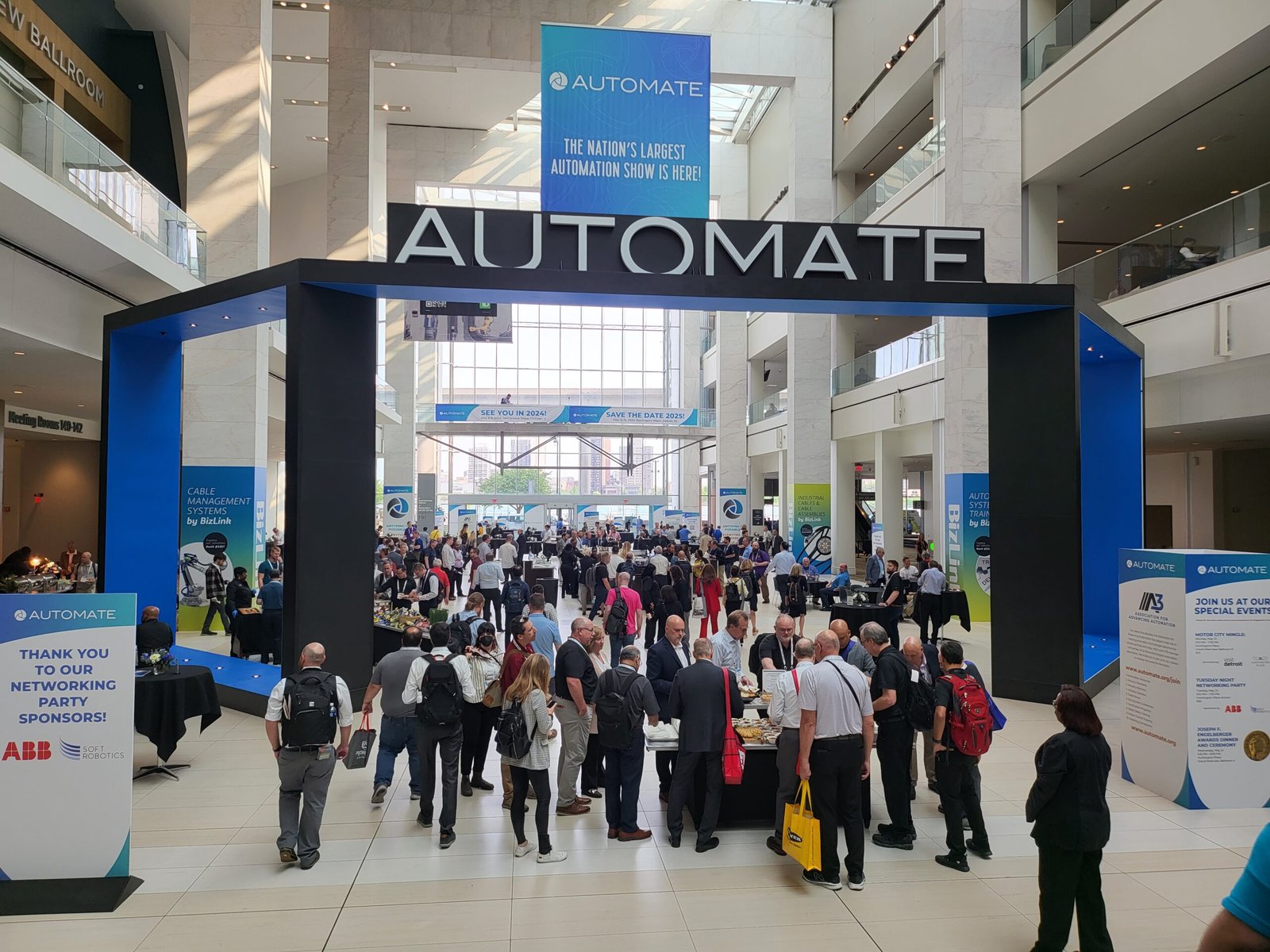
Automate Show 2025 Showcases the Next Generation of AI-Powered Robotics
The Automate Show 2025 in Chicago emerged as a global stage for the latest breakthroughs in robotics, artificial intelligence (AI), and industrial automation. Bringing together technology leaders, manufacturers, automation experts, and innovators, the event demonstrated how AI-powered machines and humanoid robots are transforming industries ranging from manufacturing and logistics to healthcare and retail.
One of the biggest attractions at this year’s exhibition was the growing presence of humanoid robots, reflecting the industry’s shift toward intelligent machines capable of working alongside humans in real-world environments. These advanced robots showcased impressive capabilities such as object recognition, natural language interaction, autonomous movement, and precision task execution, highlighting the rapid evolution of AI-driven automation.
Humanoid Robots Take Center Stage
Humanoid robots captured the attention of attendees as manufacturers demonstrated machines designed to perform repetitive, hazardous, and labor-intensive tasks with greater efficiency and accuracy. Equipped with advanced AI algorithms, computer vision, and sophisticated sensors, these robots are increasingly capable of adapting to dynamic workplace environments.
Industry experts believe humanoid robots could help address labor shortages while improving workplace safety and operational productivity. Their ability to collaborate with human workers rather than replace them was a recurring theme throughout the exhibition.
Several robotics companies demonstrated robots capable of warehouse operations, material handling, quality inspections, customer assistance, and industrial maintenance, illustrating how automation is expanding beyond traditional factory floors.
Artificial Intelligence Powers Smart Manufacturing
Artificial intelligence remained one of the dominant technologies showcased at the Automate Show. AI is rapidly becoming the backbone of modern manufacturing by enabling predictive maintenance, intelligent quality inspection, autonomous decision-making, and real-time production optimization.
Manufacturers presented AI-powered software platforms that analyze massive amounts of operational data to improve production efficiency, reduce equipment downtime, and optimize resource utilization. Machine learning algorithms are also helping factories predict equipment failures before they occur, significantly lowering maintenance costs.
The integration of AI with robotics enables smarter automation systems capable of learning from operational data and continuously improving performance over time.
Automation Expands Across Industries
Beyond manufacturing, exhibitors highlighted automation solutions for logistics, healthcare, food processing, electronics, pharmaceuticals, and automotive production. Collaborative robots (cobots), autonomous mobile robots (AMRs), machine vision systems, industrial sensors, and intelligent control platforms demonstrated how automation is becoming increasingly flexible and scalable.
The event also emphasized the growing importance of digital transformation, where cloud computing, Industrial Internet of Things (IIoT), and AI work together to create connected factories capable of making data-driven decisions in real time.
Addressing Workforce Challenges
One of the key discussions during the event focused on workforce shortages affecting global manufacturing. Automation technologies are increasingly being viewed as tools that complement human workers by taking over repetitive and physically demanding tasks, allowing employees to focus on higher-value responsibilities.
Experts noted that future factories will rely on close collaboration between skilled workers and intelligent robots, creating safer and more productive workplaces while addressing the growing skills gap.
The Road Ahead for Robotics and AI
The innovations showcased at the Automate Show 2025 underscore the accelerating adoption of AI-powered robotics across multiple industries. As humanoid robots become more capable and automation technologies continue to advance, businesses are expected to invest heavily in smart manufacturing solutions that improve efficiency, resilience, and sustainability.
With rapid progress in artificial intelligence, machine vision, robotics, and connected automation systems, the future of industrial operations is becoming increasingly intelligent. The Automate Show reaffirmed that AI and humanoid robotics are no longer emerging technologies—they are becoming integral to the next generation of industrial transformation, driving productivity and reshaping the future of work.