




The ongoing US-Iran War has rightly dominated headlines for its impact on global oil and gas markets. However, a silent bottleneck in the global supply network is causing alarm across the technology landscape. A severe shortage of helium – an essential component for manufacturing the advanced semiconductors that power modern data centres – threatens to stall the industry’s exponential growth.
If helium supplies dry up, the world’s semiconductor fabs face catastrophic shutdowns. This will inevitably lead to a shortfall of advanced chips, directly impacting data centre operators who rely on them to scale their infrastructure.
What is happening in the Middle East?

Since the conflict began on 28 February, the geopolitical landscape has severely disrupted global supply lines. Qatar is a crucial producer of helium, historically supplying a third of global output, which equated to 63 million cubic metres in 2025. Following drone strikes as part of Operation Epic Fury, QatarEnergy was forced to shut down its Ras Laffan facility, the world’s largest LNG plant.
Because industrial helium is primarily extracted as a byproduct of liquefied natural gas (LNG) production, the halt in LNG processing means helium production is also frozen. This disruption has taken 5.2 million cubic metres of helium off the market each month.
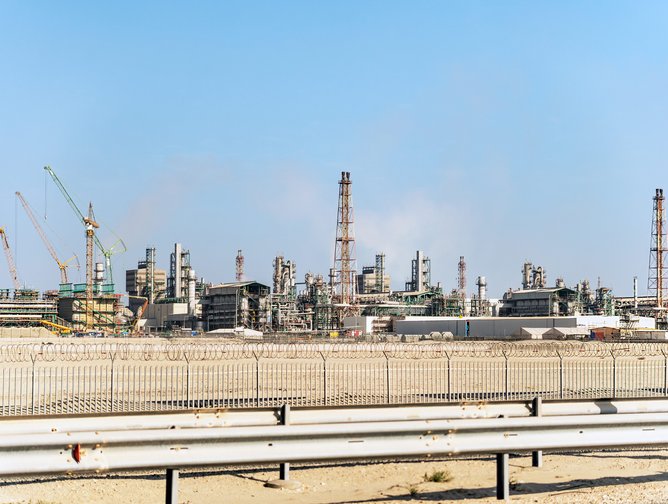
Furthermore, with Iran blocking ships from leaving the Persian Gulf through the Strait of Hormuz, alternative routes are heavily restricted, effectively taking a massive portion of global helium supplies offline.
Why helium is critical to the data centre industry
Semiconductor chips are the bedrock of the data centre industry, powering servers, storage systems and networking equipment. To manufacture these chips, ultra-pure helium is absolutely essential. The gas is critical for maintaining the ultraclean and ultracold environments required during fabrication.
Specifically, helium is used for wafer cooling in the photolithography process and for leak detection in complex sub-5-nanometre chip fabrication. Its unique properties – including having the lowest freezing point of any element – make it impossible to replace in these highly sensitive applications.

Phil Kornbluth, President of New Jersey-based Kornbluth Helium Consulting, highlights the stark reality of the situation.
“Helium is expensive relative to other gases, so, for the most part, where there are substitutes for helium, helium is no longer used,” said Phil.
Without access to semiconductor-grade helium, the fabrication of logic and memory chips will slow down or come to a complete halt, starving data centres of the hardware they need to function and expand.
Ripple effects across the broader supply chain
The data centre hardware supply chain is heavily concentrated in Asia, a region now facing rising tail risks from this helium tightness. Leading chipmakers based in Taiwan and South Korea are deeply dependent on Qatari exports. In fact, South Korea sourced nearly 65% of its helium imports from Qatar last year.
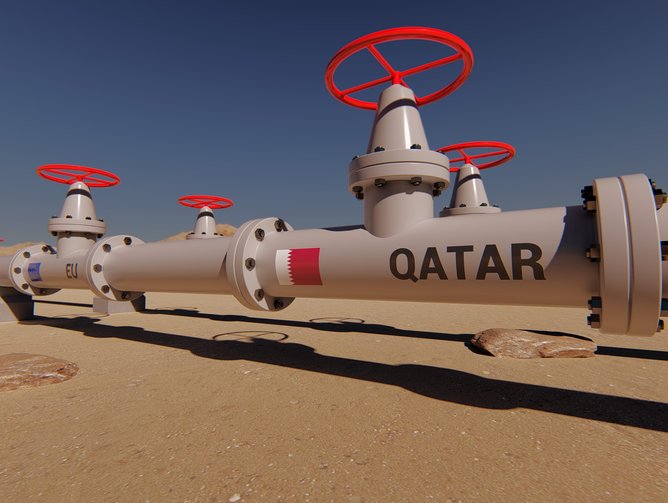
Unlike oil, helium is notoriously difficult to stockpile. Because the molecule is so small, it can escape even the most sophisticated storage systems. The global supply chain operates on roughly 45 days of buffer before existing liquid inventory boils off.
Prices have already doubled since the war began. Industry experts warn that if disruptions last 60 to 90 days, prices could surge by another 50%, potentially exceeding US$2,000 per thousand cubic feet.
63 million cubic metres
While the US and Algeria have some buffer capacity, replacing Qatar’s vast output in the short term is virtually impossible, leaving the entire data centre supply chain vulnerable to prolonged delays and skyrocketing procurement costs.
The threat to artificial intelligence and technology
The data centre sector is currently undergoing a massive transformation driven by artificial intelligence. This AI boom requires vast quantities of high-bandwidth memory and advanced compute chips. Taiwan Semiconductor Manufacturing Company (TSMC) produces about 90% of the world’s most advanced logic chips and is the sole supplier for major AI accelerators. Any disruption to their helium supply directly threatens around $650 billion in planned AI investments globally.
Beyond the raw materials, the war is also inflating energy prices. AI data centres consume up to five times as much electricity as conventional facilities. Surging oil prices compound the issue, raising the total cost of ownership for hyperscale operators and threatening the rollout of AI infrastructure worldwide.

Shawn Kim, Head of Asia Technology Research at Morgan Stanley, details how these compounding factors impact the sector.
“A disruption in the Strait of Hormuz wouldn’t automatically halt chip production, but it could ripple through power costs, materials supply, and the economics of building AI infrastructure,” Shawn told Bloomberg.
Implications for the manufacturing sector
For semiconductor manufacturers, the immediate focus is on mitigation and survival. Large fabs operate massive cleanrooms that require constant electricity and cooling, making them vulnerable to both the materials shortage and the broader energy crisis.

If constrained flows persist and exhaust existing inventory buffers, manufacturers will face tighter allocations and increased working-capital needs. In severe scenarios, this could force chipmakers to prioritise the production of higher-margin AI chips over less profitable components, exacerbating existing shortages in the broader electronics market.
Leading-edge manufacturers are attempting to offset these risks through advanced recycling systems, with top fabs able to recycle a significant majority of their helium. However, overall industrial recycling is still in its infancy and manufacturers have little room to increase efficiency further.
Ultimately, the duration of the conflict will dictate the fate of semiconductor manufacturing and the data centres that rely on it. Even if facilities restart tomorrow, the lag in shipping schedules and contract allocations means the shadow of this helium shortage will loom over the technology sector for months to come.