





Introduction
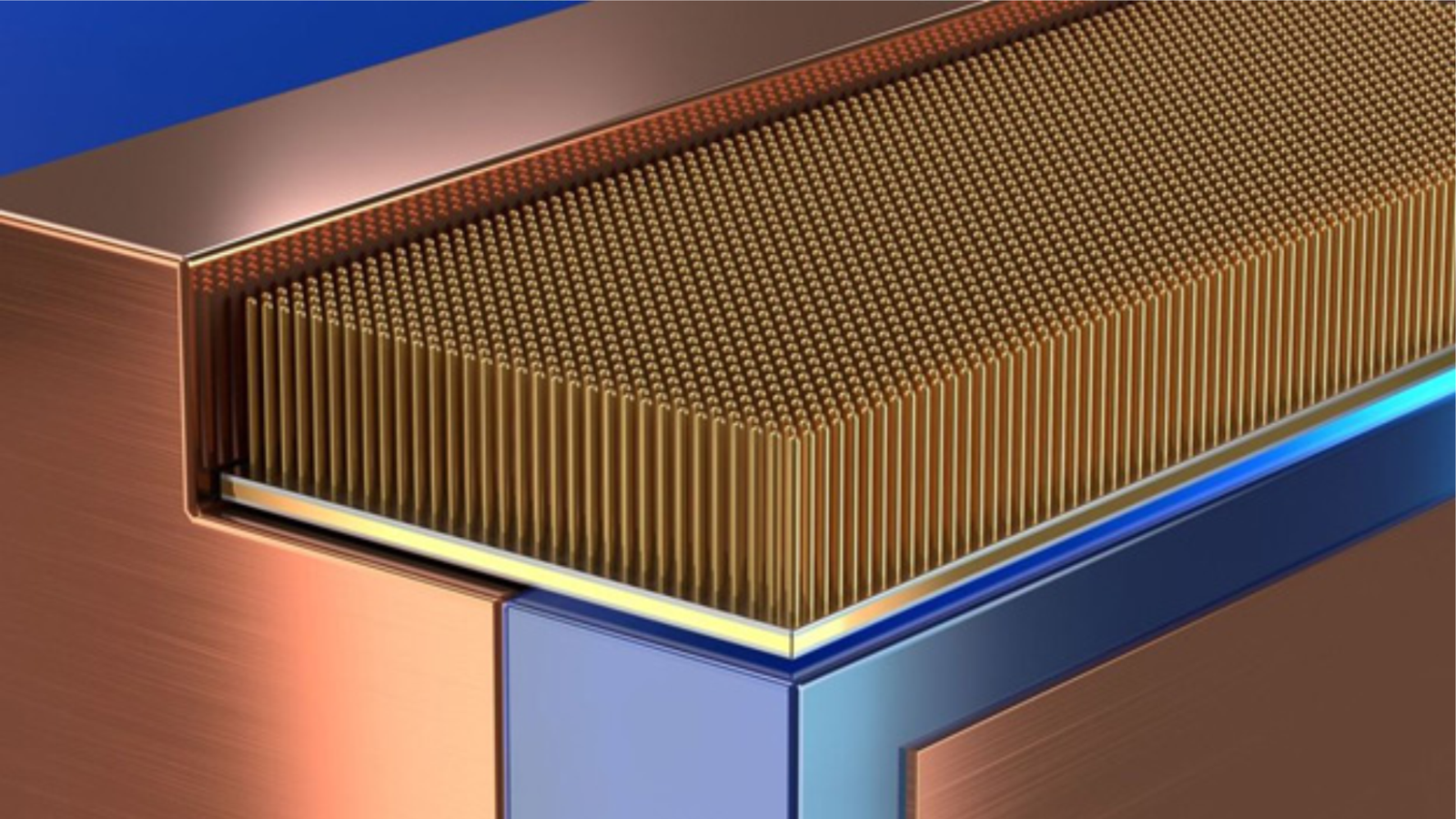
As semiconductor technology continues to scale, efficient power delivery has become one of the biggest challenges in modern chip design. Intel Foundry researchers have introduced breakthrough capacitor materials that significantly enhance power stability, efficiency, and performance across next-generation processors.
Presented at the 2025 IEEE International Electron Devices Meeting (IEDM), this innovation focuses on advanced metal-insulator-metal (MIM) capacitor materials capable of delivering up to 98 fF/μm² capacitance density, marking a major leap over current industry standards.
Key Highlights of Intel’s Breakthrough
-
New MIM capacitor materials achieve up to 98 fF/μm², compared to the current ~37 fF/μm² baseline
-
Technologies demonstrate low leakage current and high thermal stability
-
Proven reliability for over 400,000 seconds at elevated temperatures
-
Enables improved performance per watt across AI, mobile, and HPC systems
-
Compatible with existing manufacturing processes—no major cost increase
Why Power Delivery Matters in Advanced Chips
Modern processors pack billions of transistors into tiny areas. When these transistors switch simultaneously, they can cause voltage droop, leading to performance drops or errors.
Role of Decoupling Capacitors (DCAP)
Decoupling capacitors act as:
-
Instant energy reservoirs
-
Voltage stabilizers
-
Noise reducers in power delivery networks
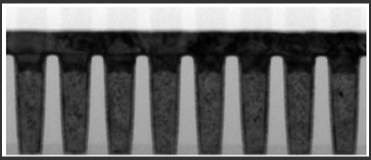
However, traditional methods—like deeper trenches or more layers—add complexity and cost. Intel’s approach focuses instead on material innovation, improving capacitance without complicating manufacturing.
The Three Next-Generation Capacitor Materials
1. Ferroelectric Hafnium Zirconium Oxide (HZO)
-
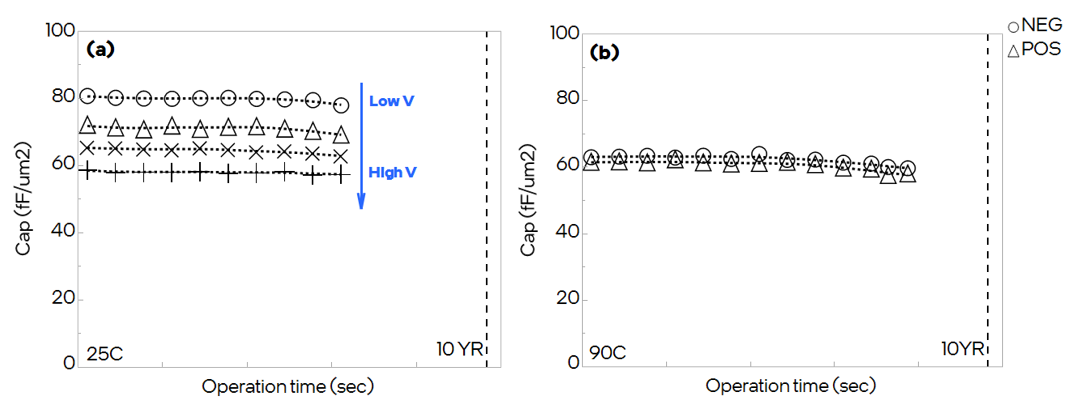
Capacitance: 60–80 fF/μm²
-
Key Feature: Field-dependent dielectric response
-
Advantage: Stable performance across voltage variations
HZO uses ferroelectric domains that adjust with electric fields, allowing dynamic capacitance while maintaining stability. Testing shows:
-
Minimal capacitance drift
-
High endurance at 90°C
-
Reliable operation over long durations
2. Titanium Oxide (TiO)
-
Capacitance: ~80 fF/μm²
-
Key Feature: Ultra-high dielectric constant
-
Advantage: Strong high-voltage reliability
TiO demonstrates advanced leakage control through the Poole-Frenkel mechanism, enabling:
-
High current tolerance
-
Self-limiting breakdown behavior
-
Long-term reliability beyond 10-year projections
3. Strontium Titanium Oxide (STO)
-
Capacitance: Up to 98 fF/μm² (highest achieved)
-
Key Feature: Exceptional dielectric constant
-
Advantage: Maximum capacitance density
STO offers the highest performance potential, though further optimization is needed for manufacturing uniformity.
Performance and Reliability Advantages
Exceptional Stability
All three materials demonstrate:
-
Negligible capacitance drift over 100,000+ seconds
-
Stable operation under voltage stress
-
Strong thermal endurance
Low Leakage Current
Despite higher capacitance, leakage remains well below industry thresholds—critical for energy efficiency.
Long-Term Durability
Testing predicts:
-
10+ years of reliable operation at elevated temperatures
-
Strong resistance to dielectric breakdown
Impact on AI, Data Centers, and Mobile Devices
AI and Data Centers
-
Improved performance per watt
-
Reduced energy consumption
-
Faster workload completion
Mobile Devices
-
Better battery efficiency
-
Faster transitions to low-power states
-
More consistent performance
-
High-Performance Computing (HPC)
-
Stable voltage delivery
-
Sustained peak frequencies
-
Increased processing headroom
Manufacturing Benefits for Chipmakers
One of the biggest advantages of this breakthrough is ease of integration:
-
Compatible with existing backend processes
-
No need for costly fabrication redesign
-
Enables multi-generational scaling
This ensures continued semiconductor innovation without exponential cost increases.
Future of Semiconductor Power Delivery
Intel’s research highlights a shift from structural complexity to material-driven innovation. Instead of adding layers or redesigning architectures, improving dielectric materials unlocks new performance levels.
What’s Next?
-
Optimization of material deposition processes
-
Enhanced uniformity for large-scale production
-
Exploration of multi-layer stacking techniques
These advancements will play a critical role in powering:
-
AI accelerators
-
Next-gen CPUs and GPUs
-
Energy-efficient data centers
Conclusion
Intel Foundry’s next-generation capacitor technology represents a major milestone in semiconductor innovation. By achieving record-breaking capacitance densities with high reliability and low leakage, these materials pave the way for more efficient, powerful, and scalable chips.
As demand for AI, mobile computing, and high-performance systems continues to grow, breakthroughs like these will be essential in overcoming power delivery challenges—ensuring faster, more energy-efficient computing for the future.