





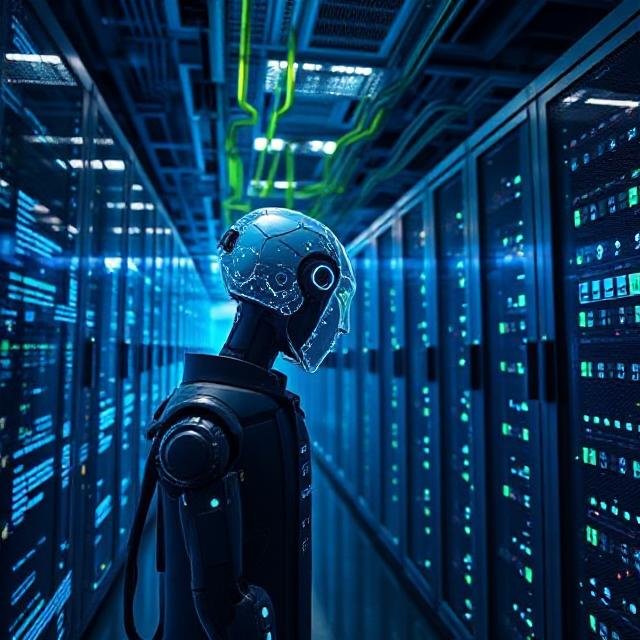
Powering AI: The Future of Data Centers
In the era of Artificial Intelligence (AI), data has become the new gold. But to fully harness AI’s potential, robust and efficient data centers are crucial. Data centers serve as the backbone for AI applications, from machine learning algorithms to real-time analytics, autonomous vehicles, and cloud computing solutions. As AI technologies evolve, the demands on data centers are also increasing, requiring innovations in infrastructure, energy efficiency, and scalability.
The Role of Data Centers in AI
AI workloads are vastly different from traditional computing. They require:
-
High-performance computing (HPC) for training large neural networks.
-
Massive storage solutions to manage enormous datasets.
-
Low-latency networks for real-time processing and decision-making.
Modern data centers are now designed with AI-specific needs in mind, integrating GPU-accelerated servers, edge computing, and high-density storage systems to optimize AI operations.
Trends Shaping AI-Powered Data Centers
1. Edge Data Centers
Edge computing brings processing closer to the data source, reducing latency and enhancing real-time AI capabilities. This is especially vital for applications like autonomous vehicles, IoT devices, and smart cities.
2. Green and Sustainable Data Centers
With AI demanding significant computational power, energy efficiency is a priority. Companies are adopting renewable energy, liquid cooling, and AI-driven energy management systems to reduce carbon footprints while maintaining high performance.
3. AI-Optimized Infrastructure
AI workloads thrive on specialized infrastructure. This includes GPU clusters, TPUs (Tensor Processing Units), and high-speed interconnects. These components allow data centers to process AI tasks faster and more efficiently.
4. Automation and Predictive Maintenance
AI itself is being used to enhance data center operations. From predictive maintenance to automated resource allocation, AI helps reduce downtime, optimize energy usage, and ensure smooth performance.
Challenges in AI Data Centers
Despite advancements, AI-powered data centers face challenges such as:
-
High energy consumption due to intense computational requirements.
-
Data privacy and security concerns, especially with sensitive information.
-
Scalability issues, as AI workloads continue to grow exponentially.
Addressing these challenges requires a combination of advanced technology, strategic planning, and sustainable practices.
The Future of AI and Data Centers
The future of data centers is intricately linked with AI evolution. We can expect:
-
Smarter AI-driven data centers that autonomously manage resources.
-
Expansion of edge computing networks for ultra-low latency applications.
-
Integration of renewable energy sources on a larger scale.
-
Next-gen cooling technologies to manage high-density computing workloads.
In essence, AI is not only consuming data center resources but also transforming how these centers operate, making them smarter, more efficient, and more sustainable.
Conclusion
AI is reshaping industries, and data centers are at the heart of this transformation. Investing in AI-optimized, energy-efficient, and scalable data centers is critical for businesses aiming to leverage AI’s full potential. As technology continues to evolve, the synergy between AI and data centers will define the next era of innovation and digital transformation.