



In a bid to provide safer drinking water to thousands across Delhi’s largest informal
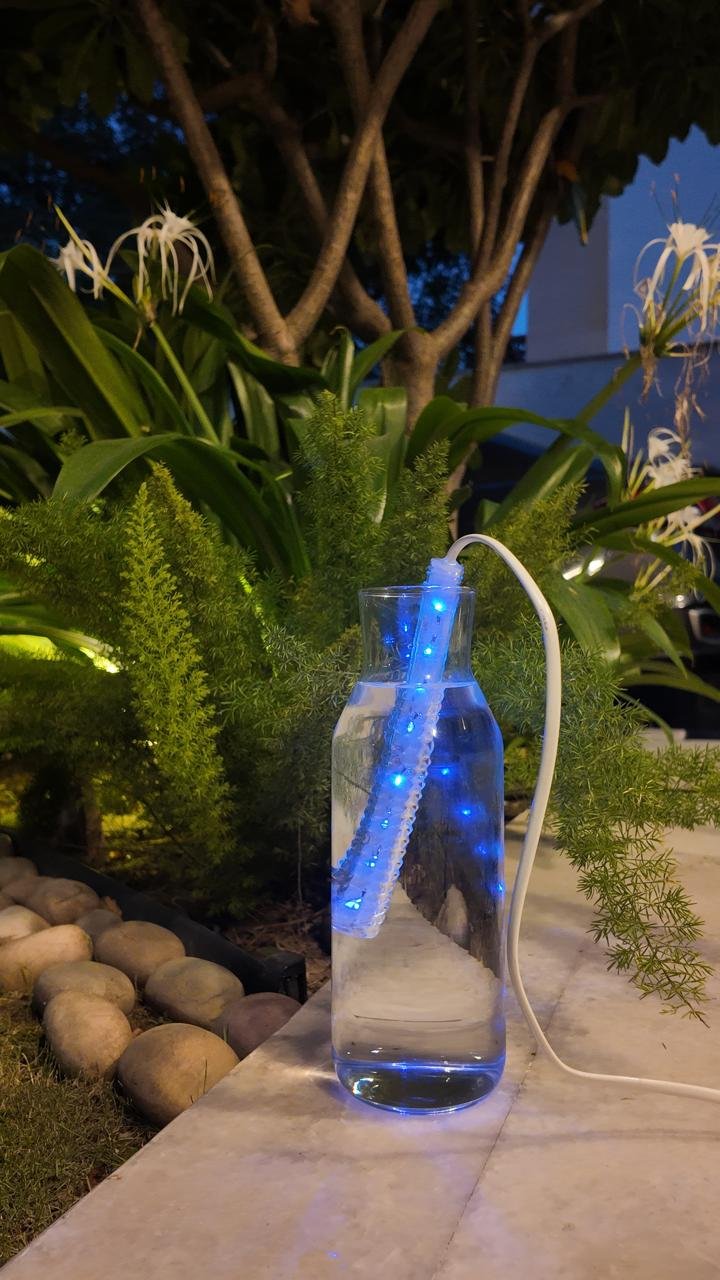
settlements, 16-year-old Devika Raj Batra, has developed a community water-safety initiative built around a patent-pending submersible UV-C LED sterilisation device. The unit disinfects stored household drinking water in about fifteen minutes. Running on a standard USB cable, this purification solution is designed to be placed directly into the buckets, matkas, and drums families already use.
The device works with a single button and emits an audible cue when the sterilisation cycle is complete. The users do not need to follow any user’s manual or read any instruction guide before using this device. What’s more, they can carry on with the household’s existing water- storage habits while making the most of this technology.
As part of the developmental process, Devika and her team has conducted microbiological testing, adhering to IS and WHO standards on household water samples before and after treatment. The device was claimed to be tested for total coliforms, E. coli, faecal coliforms, Staphylococcus aureus, Salmonella, and Shigella. Every tested indicator pathogen was successfully inactivated.
With this initiative, Devika intends to target India’s urban informal settlements, where the act of collecting, storing, boiling, filtering, and protecting household water is a strenuous task. A class 12 student from New Delhi, Devika has designed this unit from scratch. This portable sterilisation device is part of Project Amrit, which already reaches more than 10,000 residents across nearly 2,000 households in the Kusumpur Pahari region of South Delhi.
This initiative has showcased documented health improvements across 300 households till
date. The design choices behind Project Amrit, says Devika, are not specific to Delhi, but
across all applicable informal settlements, which feature a submersible form factor, chemical- free operation, low maintenance, compatibility with existing storage vessels, and usability for households with limited literacy or time. This makes the model scalable across urban settlements in South Asia, Sub-Saharan Africa, and Southeast Asia, where stored drinking water remains a major site of contamination.