



NVIDIA GTC has become less about big surprises and more about clarity. It’s where you see which ideas are no longer experimental, and which ones are actually ready to scale.
This year didn’t introduce entirely new concepts, but it reinforced something more important: AI is growing up. It’s becoming more agent-driven, more connected to the physical world, and far more dependent on thoughtful system design. The conversation is shifting from what’s possible to what actually works in production, and that’s a meaningful shift.
From agentic AI to robotics to full-stack integration, the message was consistent: the next wave belongs to builders who can turn powerful technology into reliable, real-world systems.
Here are five takeaways that stood out:
- Agentic AI Has Moved Beyond Experimentation
Agentic AI is no longer a concept you explore in a lab; it’s something teams are actively deploying.
We’re now seeing systems made up of multiple agents that can plan, retrieve information, reason, and take action autonomously. But this shift comes with new demands. These systems are resource-intensive and require low-latency inference, fast memory access, & infrastructure capable of handling unpredictable workloads.
This is no longer just a software problem; it’s a full-stack challenge.
And then there’s the economics. At the agent level, tokens are no longer just a technical detail; they’re a cost driver. Continuous agent workflows consume tokens continuously, so efficiency directly impacts scalability and margins. Optimizing token usage is quickly becoming as important as model performance itself.
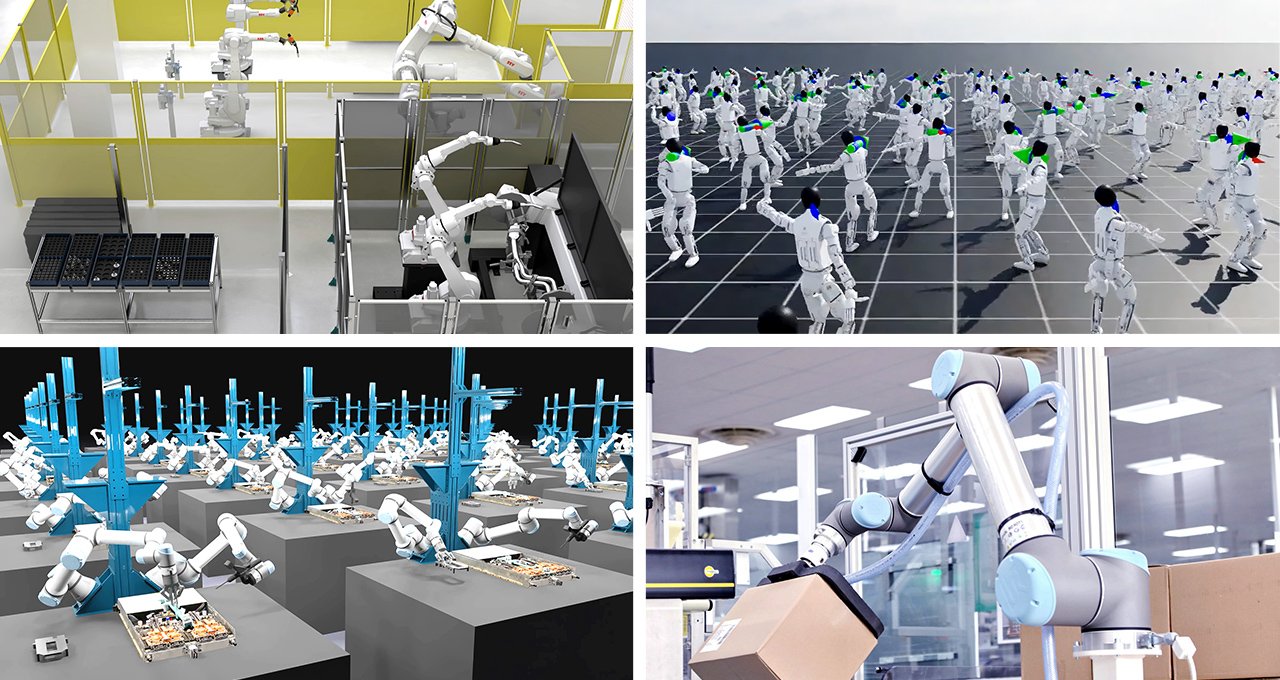
- Robotics Has Stepped into the Spotlight
Robotics wasn’t presented as a distant vision this year; it showed up as a serious, production-ready domain.
What stood out wasn’t just the hardware, but the sophistication of the AI pipelines behind it:
- Simulation-first development
- Vision-driven perception
- Real-time decision-making at the edge
Robotics is now a major AI workload, one that demands performance, reliability, and scale. The days of fragile demos are fading; these systems are being built to operate in the real world.
- Physical AI Is Raising the Bar
If generative AI pushed infrastructure, physical AI is putting it under real pressure.
When AI systems interact with the physical world, the tolerance for error shrinks dramatically. Latency, power consumption, and thermal limits aren’t secondary concerns; they’re critical constraints.
“Close enough” doesn’t work when machines are involved.
This is forcing a shift toward tightly engineered, end-to-end systems rather than loosely connected components. Real-world AI doesn’t just need to function; it needs to perform consistently under pressure.
- Infrastructure Still Decides Outcomes
Despite all the excitement around models and applications, infrastructure continues to be the deciding factor.
The teams pulling ahead aren’t just choosing the best GPUs or the latest models; they’re building cohesive systems where everything works together:
- Accelerated compute
- Pre-validated platforms
- Integrated, production-ready software
Success comes from alignment, not individual components. The real advantage lies in deploying systems that work reliably from day one, without constant rework.
- Builders Are Pulling Ahead
Perhaps the clearest takeaway: this is a builder’s moment. The spotlight is shifting away from hype and toward execution. OEMs, ISVs, and solution providers who can turn ideas into repeatable, scalable systems are gaining real momentum.
Speed alone isn’t enough. Moving fast without a strong engineering discipline only creates complexity. The teams that win are the ones that know how to design, integrate, and deliver consistently, from edge to data center.
Conclusion
The overarching message from NVIDIA GTC this year was simple: execution matters more than ever.
Flashy demos and bold claims are no longer enough. What counts is whether a system can be deployed, powered on, and trusted to perform in the real world. That requires discipline, experience, and a deep respect for the complexities of production environments.
AI is entering a phase where reliability, repeatability, and post-deployment performance define success. And in this phase, the advantage belongs to those who can build, not just imagine.