



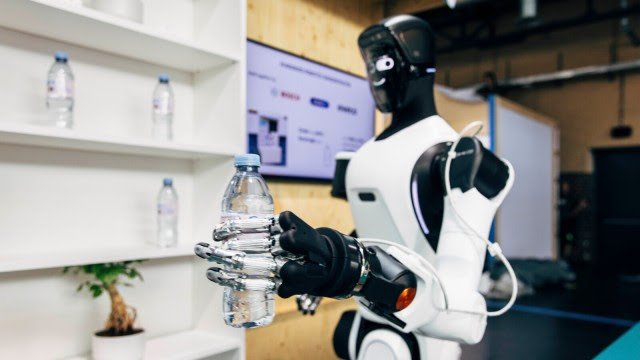
As automation enters a new era driven by advanced robotics and humanoid technologies, Bosch is strengthening its position as a key provider of the technologies that power intelligent machines.
According to Stefan Hartung, Chairman of the Board of Management of Bosch, modern robotics relies on many of the same technological foundations as automated mobility, including advanced sensors, intelligent software, and highly efficient motion-control systems. These capabilities have enabled Bosch to quickly establish itself as a trusted technology partner and supplier in the rapidly evolving robotics sector.
Hartung noted that the emergence of humanoid robots is creating growing demand for Bosch components and solutions. Leveraging expertise from multiple business areas, the company believes it is well-positioned to build a multi-billion-euro business in automation and robotics. Bosch aims to accelerate industrial-scale robotics by combining established technologies with forward-looking innovations, while also contributing to Europe’s competitiveness as a technology hub.
The company is simultaneously increasing automation within its own operations to enhance productivity, strengthen the competitiveness of German manufacturing sites, and address the ongoing shortage of skilled workers.
Providing the Intelligence Behind Robotics
Bosch sees itself not as a producer of humanoid robots but as a supplier of the technologies that serve as their “brain and nervous system.” As explained by board member Tanja Rueckert, Bosch is applying expertise gained across automotive, industrial, and consumer sectors to support the next generation of robotics.
Central to this strategy is the open ctrlX AUTOMATION platform developed by Bosch Rexroth. Designed for flexibility and ease of integration, the platform enables manufacturers to deploy robotic solutions more quickly and efficiently. Several customer projects are already being implemented using this technology.
Sensors Give Robots a Sense of Touch
A critical requirement for modern robots is the ability to interact safely and accurately with their surroundings. Bosch’s microelectromechanical systems (MEMS) sensors play a vital role in delivering this capability.
These miniature sensors allow robots to detect and respond to physical contact, enabling delicate tasks such as adjusting grip strength when handling different objects. Whether grasping a sturdy water glass or a fragile wine glass, robots equipped with MEMS technology can make precise adjustments based on tactile feedback.
Hartung highlighted the scale of future demand by comparing robotic sensing requirements to human biology. Humans possess approximately four million touch receptors, and replicating that level of sensitivity in robots would require an enormous volume of sensors. This demonstrates the significant growth potential of the sensor market. Industry forecasts from Yole Group estimate that the global MEMS sensor market could exceed $19.2 billion by 2030, growing at an average annual rate of around 4 percent.
Advancing Cognitive Robotics Through Partnerships
Bosch is accelerating robotics innovation through a combination of internal development and strategic collaboration. Dedicated teams within the company focus on bringing new robotics solutions to market, while partnerships help scale technologies for industrial deployment.
The company works with organizations that possess deep manufacturing expertise and supports robotics startups across multiple regions. Collaborations include partnerships with U.K.-based humanoid robotics companies as well as organizations in the United States and China, helping transform prototype systems into scalable commercial products.
In China, the Bosch Robotics Center China is advancing the development of physical AI technologies while driving the commercialization of robotics applications.
Building the Hardware Foundation
Beyond software and AI, Bosch provides many of the core hardware technologies required for robotic systems. Bosch Rexroth offers a broad portfolio that includes precision electric motors, high-performance servo drives, and intelligent control systems.
These technologies deliver the speed, accuracy, and reliability needed for advanced automation. Bosch also supplies integrated assemblies and manufacturing infrastructure, including conveyor systems that support robotics production environments.
AI Powers the Next Generation of Automation
Artificial intelligence is becoming a defining force in automation and robotics. According to Rueckert, combining AI with advanced electronics and mechanical engineering is opening the door to major technological breakthroughs.
AI enables robots to understand their surroundings, learn from experience, and make increasingly sophisticated decisions. Bosch incorporates AI into both its products and manufacturing operations. The company deploys AI models directly within physical devices while also using AI extensively across its global production network.
One of Bosch’s strongest advantages is the vast amount of operational data generated by more than 230 manufacturing facilities worldwide. This data serves as a valuable resource for developing future intelligent automation solutions.
To further enhance machine learning capabilities, Bosch also uses specialized motion-capture suits that record human movements. These datasets help convert human expertise into machine-readable information that can be used to train robots and AI systems more effectively.