




Why a fast pipeline can still produce the wrong answer
A production dashboard can show a normal temperature even when its latest reading is five minutes old. A maintenance report can count one equipment fault twice after a consumer restart. Both systems may meet their processing-latency targets while delivering misleading information. This is the problem I would address first when designing an industrial streaming platform: speed without a defined correctness contract is an incomplete engineering objective.
Industrial analytics combines sensor telemetry, equipment registries, maintenance records and production transactions. These sources differ in clock accuracy, update frequency and failure behavior. The architecture must distinguish event time, arrival time and the freshness of the result visible to an operator. Batch processing still suits reconciled historical reporting; streaming is justified when a decision genuinely needs earlier information. The important question is not whether data can move in seconds, but whether its meaning survives delays, retries and corrections.
CDC: preserve the history behind the current row
Change Data Capture (CDC) can replace repeated full-table extraction with a stream of inserts, updates and deletes from supported operational databases. Log-based connectors such as Debezium expose source change information while reducing the need for frequent analytical scans of transactional tables [1]. Yet CDC is a synchronization mechanism, not an automatic consistency guarantee.
For an equipment registry, I would retain the source key, operation, transaction or log position, schema version and capture timestamp. An initial snapshot must be coordinated with continuing changes: otherwise a record modified during extraction can be overwritten by an older snapshot value. Incremental snapshot techniques can divide the baseline into resumable chunks while change streaming continues [2]. The exact behavior depends on the connector and database.
Consumers also need explicit delete semantics and a policy for stale updates. A missing asset in one feed is not necessarily a deletion. Nor should arrival order across unrelated partitions be treated as a universal transaction order. Those distinctions become critical when asset metadata is joined to live telemetry.
Event time and the case for two analytical views
Imagine a sensor emitting readings at 10:00:01, 10:00:02 and 10:00:03. A network interruption causes the middle reading to arrive last. A processing-time window may assign it to the wrong interval. Spark Structured Streaming supports event-time operations and watermarking to manage late records and bound state, subject to the operation and its configured thresholds [3].
Watermarks are engineering trade-offs, not promises that every late event will be accepted. A short threshold improves timeliness and reduces retained state but may exclude delayed measurements. A long threshold increases tolerance while extending state and correction windows. I favor separating a provisional operational view, optimized for prompt decisions, from a reconciled analytical view that can absorb corrections. Each view should expose its freshness and completeness status; otherwise users may confuse a preliminary number with a finalized one.
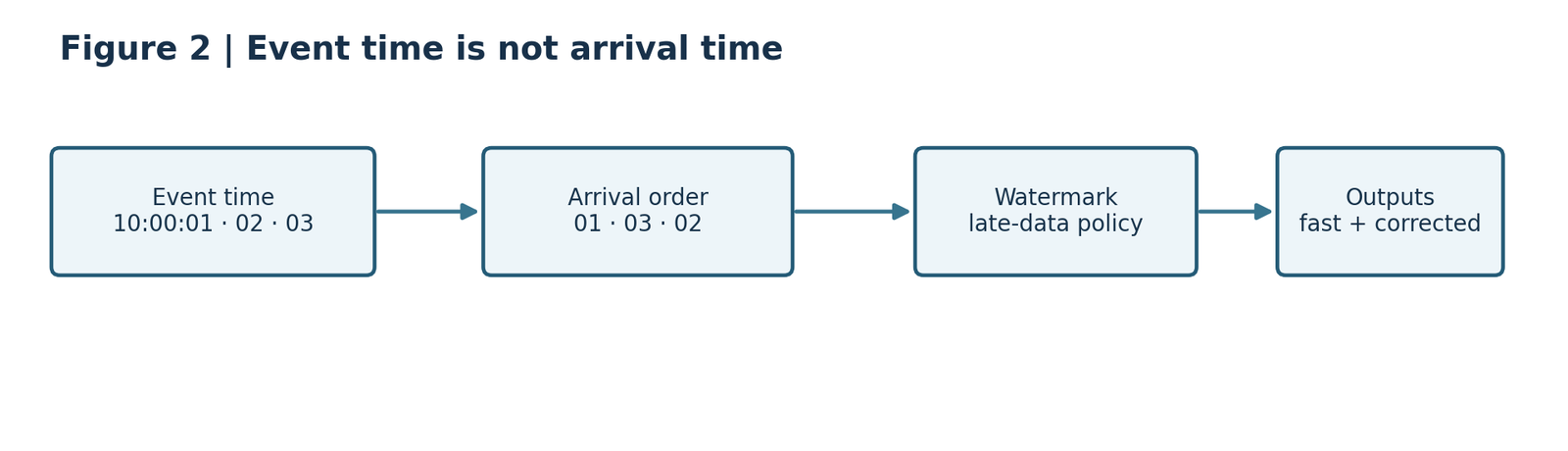
Figure 2. Illustrative out-of-order readings and dual-view processing.
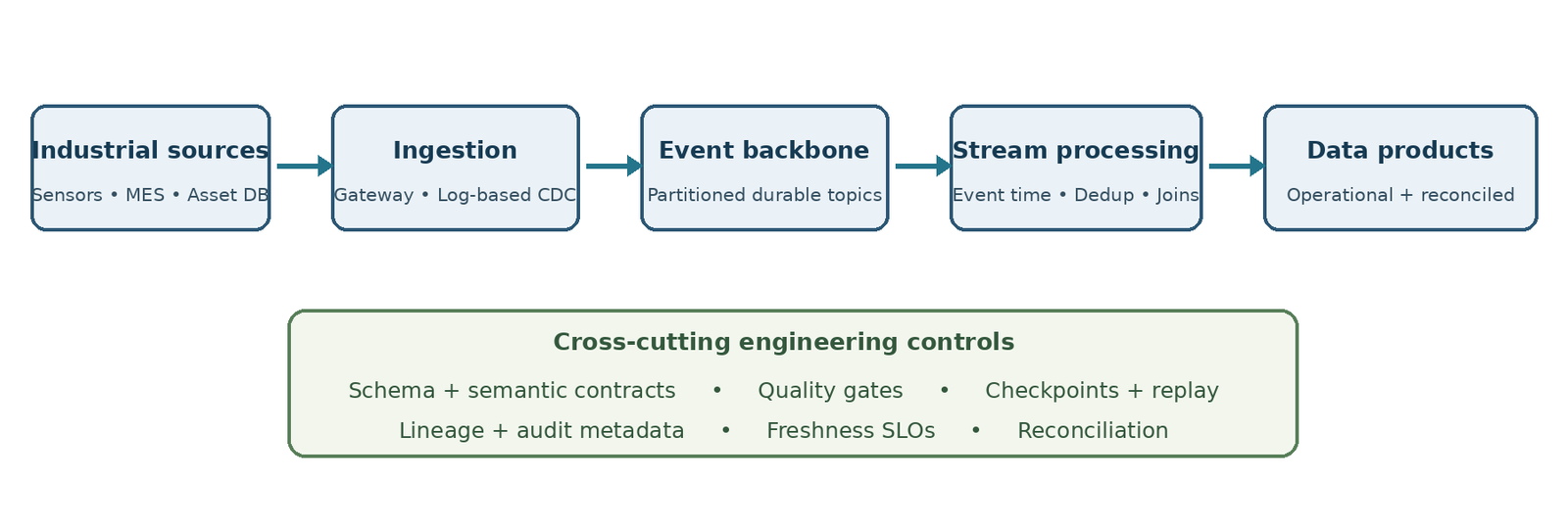
Figure 1. Original conceptual reference architecture. The control plane spans the entire ingestion-to-consumption path.
A replay-safe fault-counting example
Consider an illustrative production line where fault event F-204 is written to a reporting database. The consumer crashes after the write but before its progress is durably recorded. On restart, the event is delivered again. If the sink blindly increments a counter, one fault becomes two. This is a failure of the end-to-end contract, even if the broker and processing engine each operate as designed.
My preferred pattern is to assign a stable logical event identifier, commit accepted identifiers atomically with their effects where supported, and derive counts from deduplicated events. If a transactional sink is unavailable, the design needs a documented alternative and reconciliation process. Checkpointing restores processing progress; it does not by itself make an arbitrary external side effect idempotent. Kafka documents distinct delivery guarantees, and Spark similarly makes the scope of sink behavior important [3, 4].
Test the scenario deliberately: commit the sink write, terminate the consumer before acknowledgement, restart it, then verify that the accepted event count and resulting aggregate remain unchanged. Repeat with delayed events and a connector restart during a snapshot. These tests provide stronger evidence of reliability than a successful demonstration under normal load.
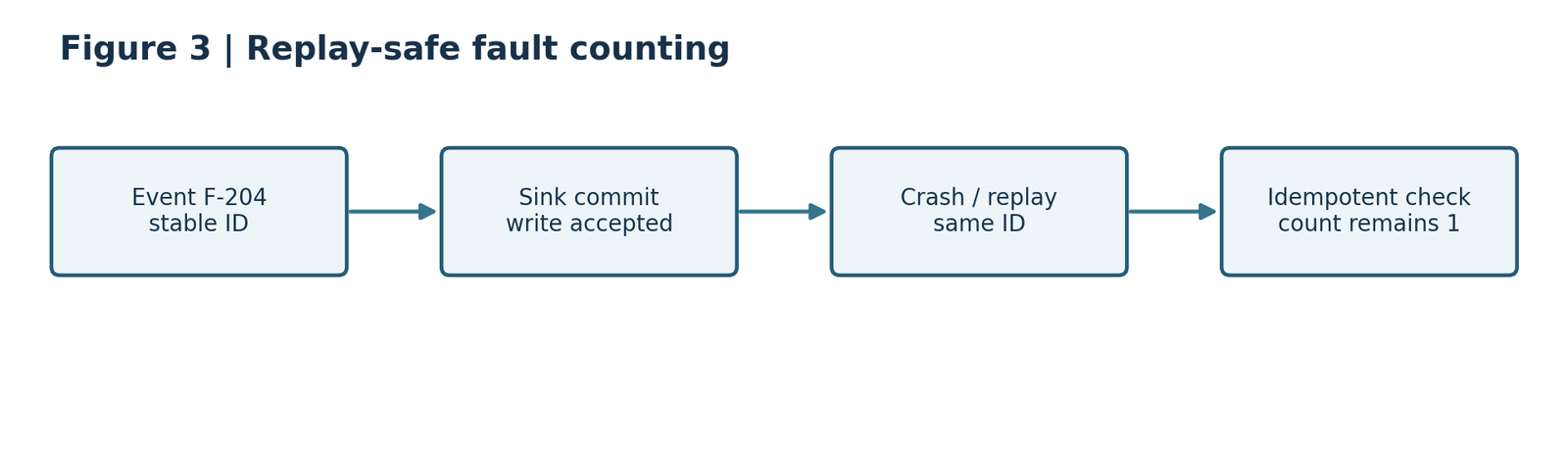
Figure 3. Illustrative replay test: a committed event must not increment the count twice.
Contracts that check meaning, not just field types
A temperature field can remain a valid floating-point number while its unit silently changes from Celsius to Fahrenheit. Schema compatibility alone cannot detect that semantic break. An industrial data contract should specify units, timestamp interpretation, asset identity, allowed nulls, source versioning and the handling of corrections. Registry-based schema checks are useful, but they should be paired with domain rules and producer-consumer compatibility tests [5].
Quality failures need visible disposition. A rejected reading should retain its event identifier, validation reason and source context in a controlled quarantine or exception workflow. A missing sequence number should raise a completeness signal rather than disappear into a dashboard average. For operationally critical systems, analytics must never be mistaken for a certified safety-control loop; local protection and fail-safe mechanisms remain separate design responsibilities.
Governance and observability at runtime
Governance is often described as a cataloging activity. In streaming systems it must also describe what happened while the pipeline was running. Useful lineage connects a source event to its schema, transformation version, quality decision and downstream data product. Useful observability measures not only infrastructure health but event-time delay, CDC lag, rejected records, checkpoint failures and reconciliation differences.
I would publish a small set of service objectives for each data product: maximum acceptable freshness, permitted missing-event rate, recovery time and correction policy. Alerts should indicate which objective is at risk and who owns the response. A green processing job is not proof that the data is current or complete.
This discipline becomes more important when predictive maintenance or AI applications consume streaming features. Model accuracy measured on clean historical records says little about behavior when live inputs are duplicated, late or associated with the wrong asset. Data lineage and quality indicators help explain a model decision and determine whether an input should be trusted.
An architecture review checklist
Before selecting a broker, processing engine or lakehouse, I ask teams to answer four questions. What business decision needs the data, and how fresh must it be? Which source metadata establishes ordering and identity? What happens when a write succeeds but acknowledgement fails? How will operators detect and repair a result that was published incorrectly?
The answers determine partition keys, snapshot strategy, state retention, sink semantics, monitoring and reconciliation frequency. Figure 1 shows a reference design rather than a prescribed product stack. Its most important components are the controls around the data path: contracts, quality gates, replay-safe writes and lineage. The goal is to make the system explainable during failure, not merely fast when everything works.
A measurable acceptance test for production readiness
Before go-live, I would record a baseline for source-to-consumer freshness, a duplicate-delivery test, a schema-change test and a replay-to-reconciliation test. The release report should state the input event count, accepted unique count, quarantined count and final aggregate for each scenario. These are not universal target values: they are evidence that the chosen design meets its own requirements. I would also capture the time needed to restore processing after a forced restart and verify whether downstream consumers can distinguish preliminary from corrected results. Documenting these observations turns architectural claims into repeatable engineering acceptance criteria. It also gives operations teams a defensible way to assess regressions after connector upgrades or changes to processing logic.
Conclusion
Reliable industrial analytics is built by treating CDC, event-time processing and governance as one end-to-end design problem. A useful platform can explain where a value came from, how late it arrived, whether it was replayed and how the final result was corrected. That is a more durable measure of real-time engineering quality than throughput alone.
Technical references
[1] Debezium. Source Connector Documentation. https://debezium.io/documentation/reference/stable/connectors/
[2] Debezium. Architecture and Connector Operation. https://debezium.io/documentation/reference/stable/architecture.html
[3] Apache Spark. Structured Streaming Programming Guide. https://spark.apache.org/docs/latest/streaming/getting-started.html
[4] Apache Kafka. Documentation, Message Delivery Semantics. https://kafka.apache.org/documentation/
[5] Confluent. Schema Registry and Schema Evolution. https://docs.confluent.io/platform/current/schema-registry/index.html
[6] OpenLineage. Open Standard for Data Lineage. https://openlineage.io/docs/
Author biography
Aditya Ranjan is a recognized data engineering expert and thought leader with more than 16 years of experience architecting large-scale enterprise data platforms, governance frameworks, and AI-ready infrastructure across the United States. His specialized expertise sits at the convergence of enterprise data architecture and AI governance, a discipline increasingly recognized as critical to how organizations responsibly scale artificial intelligence. He is a sought-after voice on modern data architecture, enterprise AI, and governance, and his original analysis on data trust, metadata, and lineage in the age of AI is featured in leading trade publication for data and AI professionals worldwide. Through his engineering leadership and published insights, he continues to help shape how enterprises turn emerging technologies into reliable, trustworthy business capabilities.