









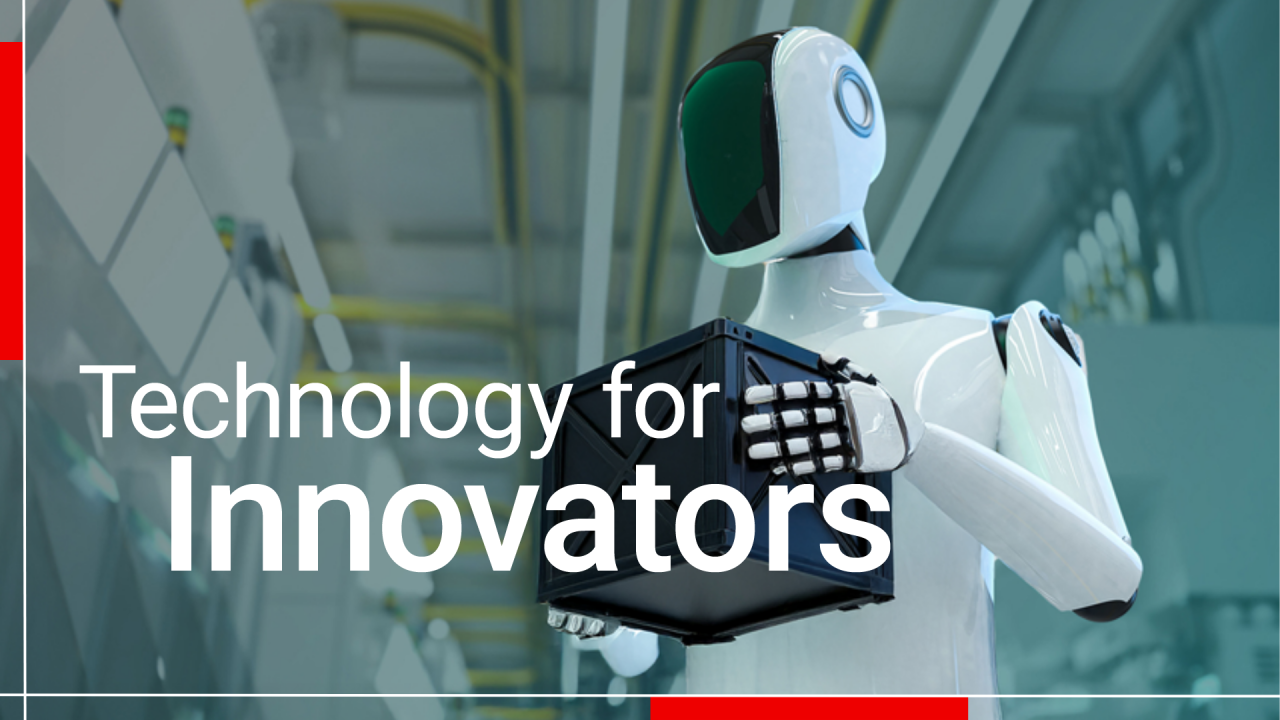
 Automation is entering a new phase, shaped by rapid advancements in humanoid robotics and physical artificial intelligence (AI). TI demonstrated these trends at CES 2026 and expects them to accelerate this year, with original equipment manufacturers and system integrators looking beyond traditional programmed systems toward technology capable of perceiving, learning and acting autonomously in a variety of settings.
Humanoid robots have rapidly evolved from concept to reality and are now seeing limited deployment in industrial settings, with some models now being marketed for use in homes and offices.
Physical AI, supported by edge AI-enabled devices, gives robots and other autonomous systems the ability to sense, reason and react in the real world. It’s where AI decision-making manifests into tangible, physical actions, such as a robot picking up a box or a car stopping autonomously. With physical AI, humans and AI models can exist in a shared space, changing how we collaborate with machines.
We’re at an inflection point, with semiconductors as a crucial technology in the design of automated systems, assisting in the transition of machine intelligence from the cloud to the real world.
Helping humanoid robots better adapt to our world
The promise of humanoid robots is simple: a machine that can perform a wide range of tasks in human spaces. In theory, robots would go through the same doors, up and down the same stairs, and use the same tools that humans do.
While this technology has come a long way, significant design challenges remain for humanoid robot scalability across environments and tasks.
“We’ve had the technology to send rockets to the moon for decades,” said Giovanni Campanella, TI’s sector general manager, industrial automation and robotics. “However, designing truly capable humanoid robots that can walk into almost any environment and work safely, consistently and independently is still a work in progress.”
The complexity of everyday environments
For Giovanni, one of the biggest obstacles for adaptability is the complexity of our world. Objects shift, lighting changes, spaces are tight, and simple tasks rarely go exactly as planned.
“Industrial settings are highly structured environments,” he said. “Homes aren’t. Two kitchens may follow the same layout, but neither of them are likely to be the same in every detail. Even performing a common task like ‘put this away’ is going to vary widely depending on where it goes, how it fits, and what else is in the way. Designing a robot that can adapt to these environments without direct supervision is an evolving challenge.”
Semiconductor technologies for humanoid robots
Designing humanoid robots that can operate safely and independently in dynamic environments requires a convergence of precision motor control, low-latency sensing, and edge processing, all in compact, reliable, high‑efficiency designs.
Some of the most crucial components for the current and next wave of humanoid robots include devices for:
- Deterministic control: Real‑time microcontrollers for precise, high‑performance motor control.
- Environmental awareness: Radar, camera, magnetic and inductive sensing.
- Efficient power delivery: gallium nitride power-stage solutions and battery management systems.
What’s next for humanoid robots?
According to Giovanni, “As designers learn what works, we may also see humanoid robots in different shapes, using different mobility approaches and diverse types of end effectors (such as hands) in configurations optimized for specific environments. The humanoids that we see today are only the start of an engineering journey.
“At TI, we’re focused on what we do best: building the foundational technologies that help engineers move from promising prototypes to practical systems.”
Turning high-performance computing into real-world actions with physical AI
While not a completely new technology, physical AI is transforming automation in robotics, vehicles and other intelligent machines. It blends local AI processing, sensor fusion and adaptive reasoning so that algorithms can physically interact with our world.
Enabling physical AI with innovative semiconductors
Artem Aginskiy, TI’s general manager of Jacinto™ high-performance computing processors, discussed physical AI in depth in a recent article on Electronic Design, and how semiconductors are the “foundation of physical AI.”
“What I’ve seen in many designs is that improvements in one area ripple into others,” he said. “A new sensing chain can enable more precise control. A processor that supports a slightly larger model can help a robot handle more complex scenarios. And a refined power architecture will help systems maintain consistent performance during rapid movements. Fundamentally, physical AI depends on this interaction between components in terms of predictable processing, reliable sensing and stable power systems.”
How physical AI and edge AI work together
As physical AI becomes more prevalent, the role of edge AI is also growing even more important for automated systems. Edge AI describes AI models that run locally on processors and microcontrollers, collecting sensor data, processing it onboard, and generating output without relying heavily on remote servers. The output from edge AI processing can then be used by an autonomous system to take an action.
Running AI models locally reduces dependence on the cloud, increases reliability, and improves how quickly systems can act in response to incoming sensor data. Together, edge AI and physical AI are expanding what machines can perceive and accomplish, unlocking new levels of autonomy.

What’s next for physical AI?
When predicting what’s next in physical AI, Artem sees semiconductor manufacturers playing a vital role in shaping its potential and supplying the critical building blocks.
“Ultimately, [semiconductor manufacturers] are the ones supplying the building blocks of the physical AI era,” he said. “As these technologies spread into more types of devices and new tiers of products, it’s our job to make sure that these capabilities remain within reach for as many designers as possible.”
A look ahead for automation
As engineers continue refining these technologies, we’ll see robotics and intelligent machines expand into new industries, new spaces and entirely new categories of work, including some we may not have even considered. The next phase of automation will be defined by smarter algorithms, but also by systems that can act with precision, efficiency and safety in the real world. That shift starts with semiconductors.




.)